CBD vape law in the UK is one of those subjects where confident answers outnumber accurate ones. Shops advertise thresholds, forums repeat figures borrowed from other countries, and the underlying legal framework is genuinely more layered than a single percentage. This guide sets out how CBD vape law actually works in Britain in 2026, what a compliant product looks like and what a seller is not allowed to tell you.
Cannabidiol itself is not a controlled substance
The starting point is simple enough. Cannabidiol on its own is not listed as a controlled drug under the Misuse of Drugs Act, which is why CBD products can be sold openly across the UK. What complicates matters is everything else that can travel with it.
Tetrahydrocannabinol and several related cannabinoids are controlled. A CBD product becomes unlawful not because of the CBD it contains but because of the controlled cannabinoids that may remain in the extract. UK legislation approaches this through the concept of an exempt product, which sets strict conditions on the quantity of controlled substance a preparation may contain and on whether it can be recovered from it.
This is where the widely quoted figure of 0.2 per cent comes from, and where it is routinely misapplied. That threshold relates to the hemp varieties farmers may grow under licence, not to the composition of a finished bottle on a British shelf. A retailer citing it as the legal limit for the product in your hand is repeating a common shorthand rather than the operative rule.
How CBD vape law differs from CBD food law
A distinction worth understanding, because it explains most of the confusion online. Ingestible CBD products in the UK sit under the novel foods regime run by the Food Standards Agency, which requires authorisation and maintains a public list of products allowed to remain on sale while applications are assessed.
CBD e-liquid is inhaled rather than eaten, so it does not fall under that food framework. CBD vape law in the UK therefore rests on general product safety rules, consumer protection law, the controlled substances position described above, and advertising rules, rather than on a novel foods authorisation. A CBD vape product will not appear on the FSA list, and its absence is not evidence of anything.
Nicotine changes the picture again. A vaping product containing nicotine must be notified to the MHRA and complies with the same limits as any other British e-liquid, meaning 10 ml bottles, 2 ml tanks and a maximum strength of 20 mg/ml. Products combining nicotine and CBD are treated as nicotine vaping products first, and several trading standards services take the view that CBD vape liquid is sold nicotine free precisely to avoid that overlap.
What sellers are not allowed to say
Advertising rules are stricter than most buyers realise, and they are the fastest way to judge a retailer. Medicinal claims are prohibited outright: a seller cannot state or imply that a CBD product treats, cures, relieves or prevents any condition, because a product making such claims would need a medicines licence it does not hold.
Vaping products are also subject to substantial restrictions on advertising in the UK, which is why compliant CBD vape brands communicate in terms of ingredients, extraction and testing rather than outcomes. A shop leaning heavily on wellbeing promises is telling you something about its compliance culture.
Age restriction applies as well. Vaping products are sold only to adults aged 18 or over across the UK, and any device or liquid intended for inhalation falls under that rule regardless of whether it contains nicotine.
Checking a product before you buy
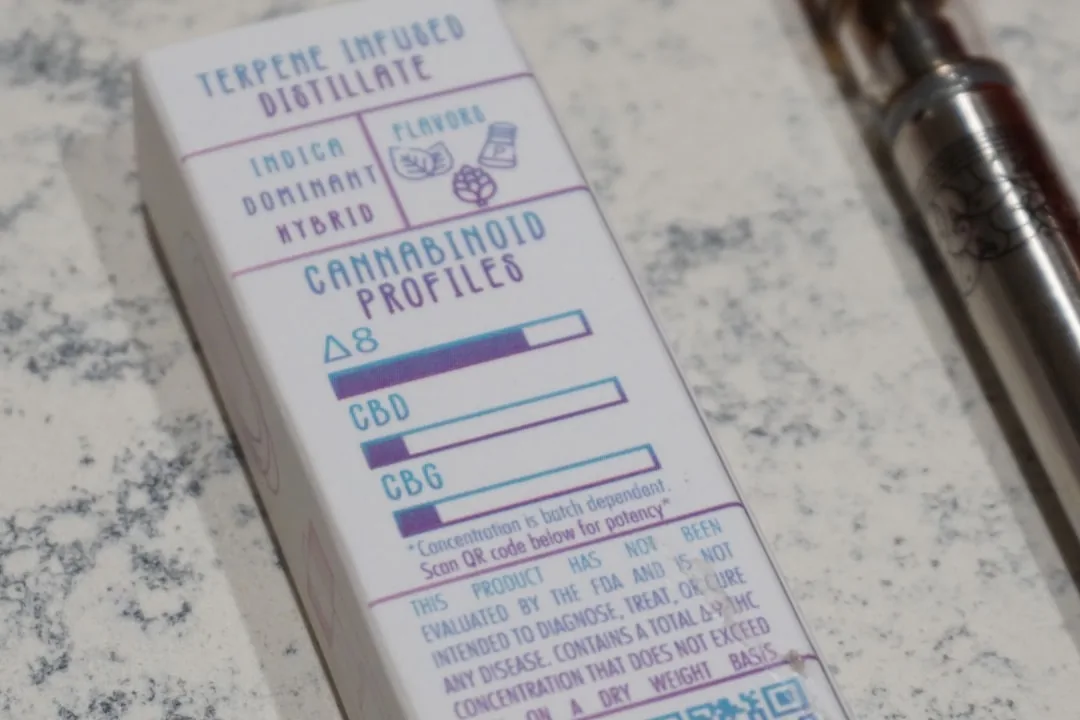
The practical test has three parts. First, look for a current certificate of analysis from an independent laboratory, issued for the specific batch rather than for the brand in general, showing the cannabinoid profile. Second, check the ingredient list reads like an e-liquid, with a propylene glycol and vegetable glycerine base, since CBD oils intended for oral use are not formulated for inhalation and should never go into a tank. Third, verify that the seller gives a UK business address and responds to questions about sourcing.
Hardware matters too. CBD e-liquid suits a higher resistance coil and a tighter mouth to lung draw rather than a high power sub ohm setup, and our guide to CBD e-liquid covers the practical side in detail. If you are choosing a device for it, our comparison of open and closed pod systems is the useful starting point, since closed cartridge systems rarely offer CBD options at all.
How CBD vape law is enforced in practice
Enforcement of CBD vape law in the UK is spread across several bodies rather than concentrated in one, which is another reason the picture looks blurred from outside.
Local authority trading standards teams are the ones most likely to inspect a shop, sample a product and act on what they find. The MHRA handles medicines claims and the notification system covering nicotine containing vaping products. The Advertising Standards Authority deals with marketing claims, and its rulings against CBD sellers are published and searchable, which makes them a useful reality check on any brand you are considering.
For a buyer, the practical consequence is that compliance is visible if you look. A brand that has been the subject of published rulings, or that markets in language those rulings have already condemned, is telling you how it approaches the rest of its obligations. Conversely, a seller who declines to answer a health question and points you to a certificate instead is behaving exactly as the framework intends.
Where the framework may go next
CBD regulation in the UK has moved several times since 2019 and there is no reason to assume it has settled. The FSA continues to work through its novel foods list on the ingestible side, and the Home Office periodically revisits how exempt products are defined, which is the part that would most directly affect CBD vape law.
For a buyer the consequence is modest but real: treat any article, including this one, as a snapshot rather than a permanent answer, and prefer sellers who publish current testing rather than a compliance claim from several years ago.
FAQ
Is CBD vape liquid legal to buy in the UK? Yes, CBD itself is not a controlled substance and CBD e-liquid is sold legally across the UK, provided the finished product does not breach the rules on controlled cannabinoids and is sold to adults aged 18 or over.
Does the 0.2 per cent THC figure apply to the bottle I buy? Not directly. That figure concerns the hemp varieties licensed for cultivation. The finished product is assessed against the exempt product rules on controlled substances, which is why batch testing matters more than a percentage on a label.
Do CBD vape products need FSA novel food authorisation? No. The novel foods regime covers ingestible products. Inhaled CBD e-liquid sits outside it, which is why you will not find vape liquids on the FSA public list.
Can a shop tell me what CBD will do for me? No. Medicinal claims about CBD products are not permitted in the UK, and a retailer making them is breaching advertising and medicines rules rather than sharing inside knowledge.
Could vaping CBD affect a roadside drug test? Roadside tests look for controlled substances rather than CBD. Products carrying broader cannabinoid profiles are the ones where buyers ask this most often, which is another argument for reading the batch certificate before purchase.
The practical summary
CBD vape law in the UK rests on a handful of principles that are easier to apply than to summarise in a single number. Cannabidiol is lawful, controlled cannabinoids are not, the inhaled category sits outside the food rules, nicotine pulls a product into the MHRA notification system, and nobody may tell you what the product will do for your health.
Judge products on batch testing, formulation and the seller's transparency rather than on a threshold quoted in a banner. Applied that way, CBD vape law stops being a source of anxiety and becomes a short checklist you can run through in a couple of minutes before buying. Our full CBD e-liquid guide continues from where this one stops.
Content for adults aged 18 or over. Vaping products containing nicotine are addictive. This article is editorial and is not legal advice or a purchase recommendation.