The Thelema Solo occupies a particular place in Lost Vape's catalogue: it is the single cell version of a family that first made its name with two batteries. Released at the start of 2022 and still widely stocked by UK retailers, it appeals to vapers who want a capable mod without carrying the weight of a dual cell device. This article covers what the Thelema Solo actually offers, and, just as importantly, the naming confusion that makes its specifications so hard to pin down.
What the Thelema Solo actually provides
The device discussed here is the Thelema Solo 100W, which should not be confused with the other members of the family. It runs on a single removable cell, not supplied, in 18650, 20700 or 21700 format, with an adapter for the smaller size included in the box.
Dimensions listed by retailers are 97.5 mm tall, 39 mm wide and 28.5 mm deep, with a weight of 150 grams. The chassis is a zinc alloy, dressed depending on the finish in a leather effect panel or a carbon fibre pattern. The battery door is removable, so panels can be swapped to change the look.
Output covers 5 to 100 watts and the board accepts resistances between 0.15 and 5.0 ohms. The connection is a standard 510, and the deck takes atomisers up to 26 mm in diameter without overhang. The screen measures 0.96 inches and charging is over USB-C with fast charge support.
On protections, product sheets list short circuit protection, charging protection, a low output cut off and a ten second puff limit. These are the standard guardrails for the segment rather than a substitute for care over the cell itself.
Solo, Quest and 100 Pro: keeping the models apart
This is the point most retail pages handle badly, and the first source of error when you go looking for specifications. The Thelema range covers several distinct devices, and a figure read on one does not apply to another.
The Thelema Quest 200W is the two cell model, larger and more powerful. The Thelema Solo is its single cell counterpart with maximum output brought down to 100 watts. A DNA version also exists in the Lost Vape catalogue, built around an Evolv board rather than the in house chipset.
Added to that is a Thelema Solo 100 Pro, which appeared later and which several UK retailers describe with a Quest generation chipset and support for 18650 or 21700 cells. It is also rated at 100 watts, but its dimensions and its board differ from the original. When comparing two spec sheets, always check for the Pro designation and the chipset name before drawing any conclusion.
The Quest 2.0 chipset and its five modes
The original Thelema Solo carries the Quest 2.0 chipset, the board Lost Vape developed in house and already used on the Thelema Quest. It offers five operating modes, which places it above the single setting devices common at the entry level.
Variable wattage remains the mode almost everyone uses day to day. Variable voltage is mainly of interest to vapers building their own coils, where resistance varies from one build to the next. Temperature control covers a range of 100 to 315 degrees Celsius and handles nickel, titanium, stainless steel 316 and stainless steel 904.
Bypass mode lets the cell voltage drive the output directly, in the spirit of a mechanical device while keeping the electronic protections in place. The curve mode lets you shape the heating profile yourself across four seconds in half second increments.
The board stores three presets, which in practice means three atomisers whose settings stay in memory rather than being reset at every hardware change. Reviews published since 2022 agree on a three button interface that is quick to learn, with output locked by pressing plus and minus together.
Reading a cell datasheet before anything else
One point deserves stating without hedging: we publish no build values, no discharge figures and no wattages presented as safe. Those numbers belong to the exact cell you are using, and the only valid reference is the datasheet published by that cell's manufacturer.
The correct approach is to identify the cell precisely, brand and full reference, then find the manufacturer's own datasheet rather than the retailer's description. Two figures matter: capacity in milliamp hours and maximum continuous discharge rating. Generic wraps routinely advertise values the cell inside cannot deliver.
You then compare that rating against the current your setup will actually draw, which depends on the installed resistance and the working voltage. Our guide on choosing a vape coil sets out that reasoning, and our comparison of the 21700 and 18650 formats explains why the available margin differs by format.
Three rules do not bend, whatever the device. The plastic wrap must be perfectly intact, with no cut or peeling, and a damaged cell is rewrapped or recycled before further use. Cells travel in a rigid dedicated case, never loose in a pocket with keys or coins. Charging happens on an external charger matched to the format, a habit covered in our roundup of essential vape accessories. Where a mod takes two cells, they are bought and kept as a matched pair.
Everyday handling of the Thelema Solo
Beyond the specification sheet, a few practical points come up repeatedly in owner feedback published since release.
The 510 connection is spring loaded, which spares the threads on atomisers swapped frequently, and the deck is flat enough that most tanks sit flush. The battery door is magnetic rather than hinged, which makes cell changes quick and means the door is worth checking after the mod has been in a bag.
The screen is small by current standards but legible, and the three button layout puts the mode menu behind the fire button rather than a separate control, which is quick once learned and mildly opaque on the first evening. The wattage lock, triggered by pressing plus and minus together, is the feature most worth setting up on day one for a mod that lives in a pocket.
Who it suits
The Thelema Solo is aimed at someone already comfortable with a removable cell device. The number of modes and the cell handling assume a baseline of technical familiarity, and a newcomer is generally better served by a pod kit with a built in battery.
The format is a deliberate compromise. Reviewers consistently note that this is not the slimmest single cell mod available, since the design and the zinc alloy cost something in bulk and weight. In exchange, the finish and the 26 mm compatibility make it a comfortable base for larger atomisers.
FAQ
Does the Thelema Solo come with a cell? No. UK product listings are consistent on this: the cell is not included. The box contains the mod, a USB-C cable, an adapter for 18650 cells and the instructions.
What is the difference between the Thelema Solo and the Thelema Quest? The Quest 200W runs two cells and reaches 200 watts. The Solo is the single cell version capped at 100 watts, in a noticeably more compact body.
Can I charge the cell inside the mod? The USB-C port supports onboard charging with a fast charge function. Retailers and reviewers alike still recommend an external charger matched to the cell format.
What atomiser diameter does it take? The 510 deck accepts tanks and atomisers up to 26 mm without visible overhang. Beyond that, the overhang becomes noticeable at the edges of the top cap.
Does temperature control work with any coil? No. The mode requires a compatible wire, meaning nickel, titanium, stainless steel 316 or stainless steel 904 among the materials the board handles. A kanthal coil cannot be used in this mode.
What to take away
Several years after release, the Thelema Solo remains a coherent single cell mod: a full featured chipset, a wide output range, generous atomiser compatibility and careful construction. Its limits come down to size and weight, both direct consequences of the design choices Lost Vape made.
Before buying, the real precaution is establishing which version you are looking at, given how often spec sheets blend the original with the 100 Pro. And whichever Thelema Solo you settle on, it is rigour over the cell, its datasheet, its wrap and how it travels that determines safe use far more than the electronics inside the mod.
Content for adults aged 18 or over. Vaping products containing nicotine are addictive. This article is editorial and is not a purchase recommendation.
Read next
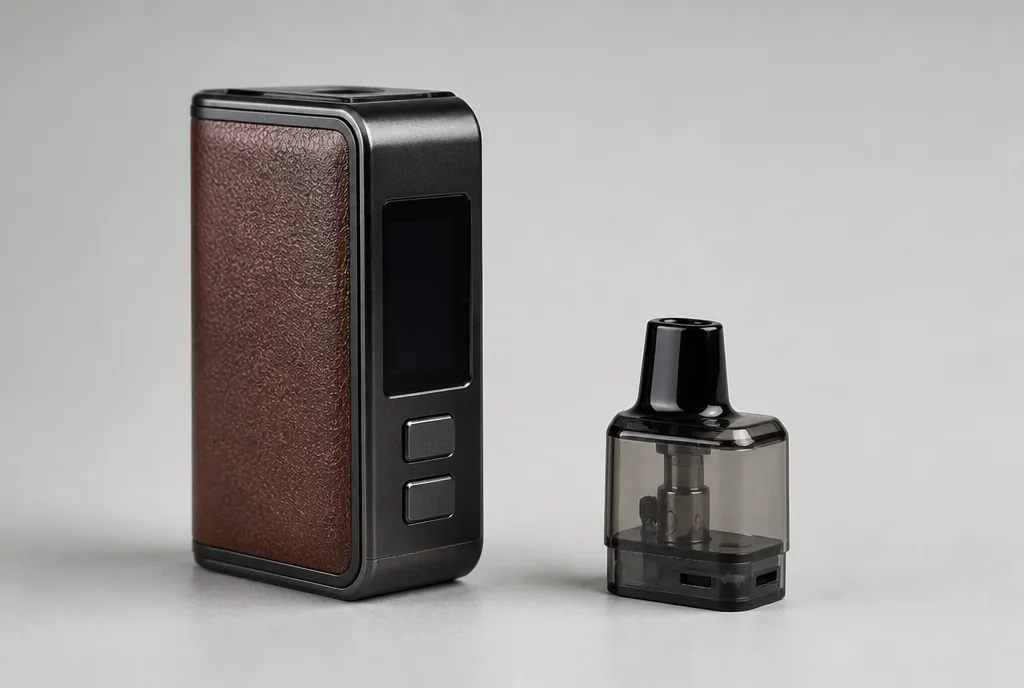
Voopoo Drag S3 review, the spec sheet checked against published tests
The Voopoo Drag S3 checked source by source, from its 3000 mAh battery and 60 W ceiling to the 2 ml UK kit and the flaws reviewers keep flagging.
21700 vs 18650: choosing a cell format for your mod
21700 vs 18650 for a vape mod: size, runtime, mod compatibility and how to read a cell datasheet properly before you buy anything.